New Gorhambury·Baconian Ciphers

One-Day Report · latest issue: October 12, 2026

A daily record of progress on the Baconian ciphers. Each issue is one day's work, presented three ways: a public FAQ, a reference column of every source used, and an unrestrained technical colophon.

The signature content

Twenty things Francis Bacon started that are still running

Each entry is one creation, with its year, and what it drives today. An accomplishment with no living consequence is not on these lists.

Where a part had precedent, the entry names only what is his. Torches carried letters in Polybius; concealment was a named art before Trithemius published it. What has no precedent is the union of the three in one place — a message reduced to binary, carried by any medium that holds two states, concealed in the carrying.

Global in scope

  1. 16201The scientific methodEvery engineering discipline rests on it
  2. 16232Binary encoding of the alphabetFive places, two states. The shape of every character code since.
  3. 3Medium-independent signallingAny two-state carrier will do — which is why the same bits now travel over copper, fiber and radio.
  4. 16264The research institutionEvery funded laboratory, every peer-reviewed journal
  5. 16055The idea of progressThe assumption behind every research budget
  6. 16206Cognitive biasThe double blind, the control group, behavioral economics
  7. 16057The classification of knowledgeEvery library and faculty still cuts knowledge where he cut it
  8. 8Knowledge as instrumentWhy research is funded by states and companies at all
  9. 16239A test for concealmentA cipher must “not raise suspicion” — still the design goal of digital steganography, and what steganalysis attacks.
  10. 162610The fundamental degree of FreemasonryThe pattern for the fraternal order and the oath-bound chapter

The English language

  1. 16231The First Folio itselfEighteen of the plays survive nowhere else
  2. 2The vocabularyMore first citations in the OED than any other source in English
  3. 3The idiomStill in daily English, and most people do not know they are quoting
  4. 4Dramatic blank verseIt set the sound of serious English speech
  5. 5The soliloquyThe voiceover, the interior monologue, the held close-up
  6. 15976The essayThe dominant form of English nonfiction ever since
  7. 16057Philosophy written in EnglishEnglish is now the working language of science worldwide
  8. 16208The aphorism as argumentEvery specification, standard, protocol and statute since
  9. 16229Modern narrative historyThe model for narrative history as it is still written
  10. 160510The plain styleThe house style of science, journalism and technical writing

Where this rests. The second list is built on this project’s premise — that Bacon was the primary author of the 1623 Folio. The One-Day Reports below do not assume it. They test it, and publish the result either way.
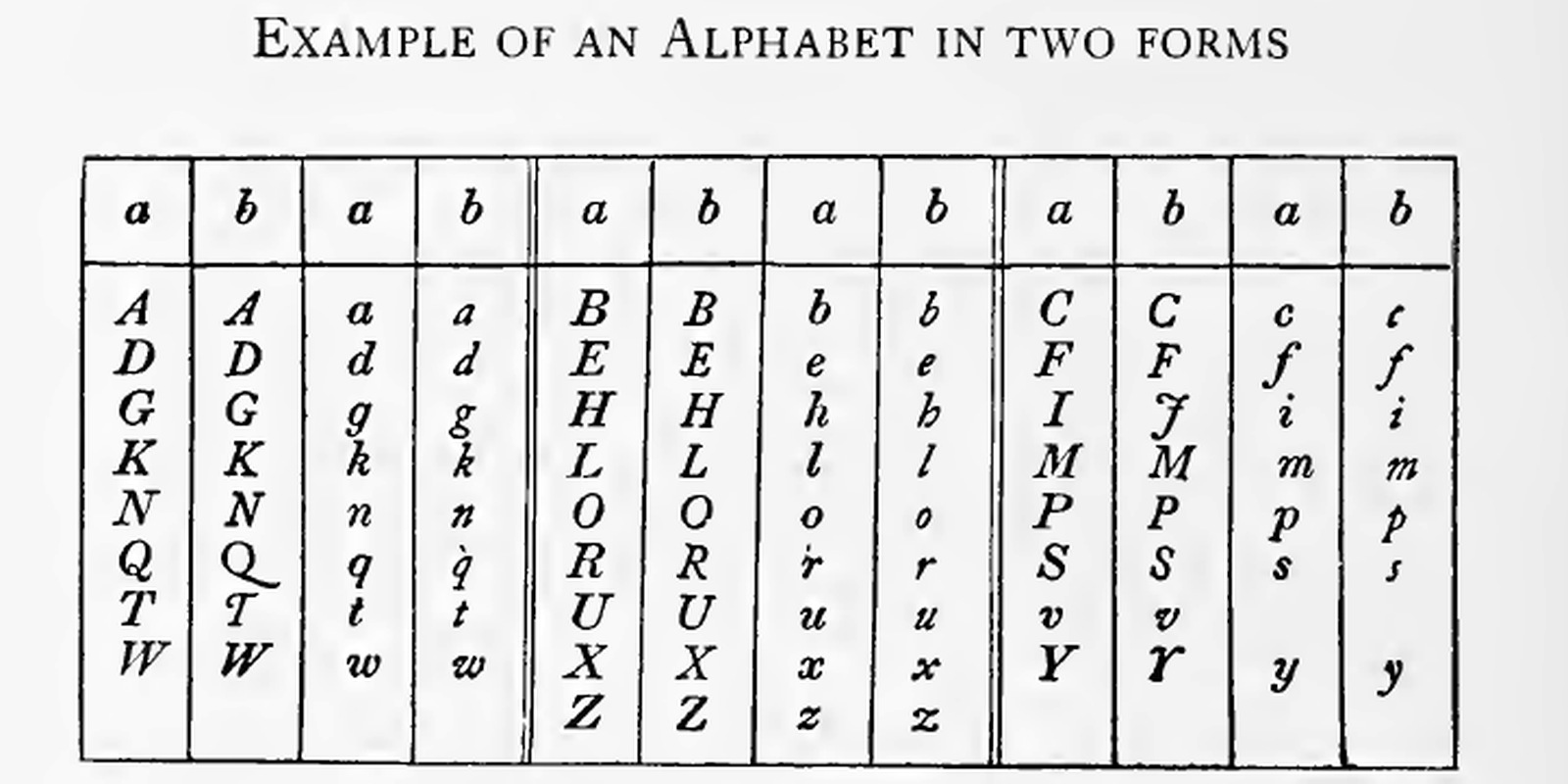
A table of the alphabet printed twice, in two slightly different founts, headed a and b
Strand
Biliteral Cipher
Bacon’s bi-formed alphabet, as Spedding drew it — Riverbank, The Keys for Deciphering, 1916, p. 16
Is the italic type in Shakespeare's First Folio one fount, or two? A bibliographical test of a claim made in 1899 and never measured.
Latest — October 12, 2026
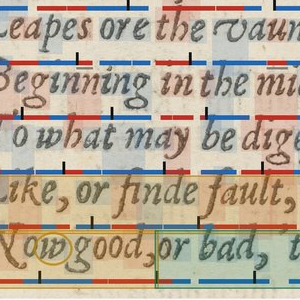
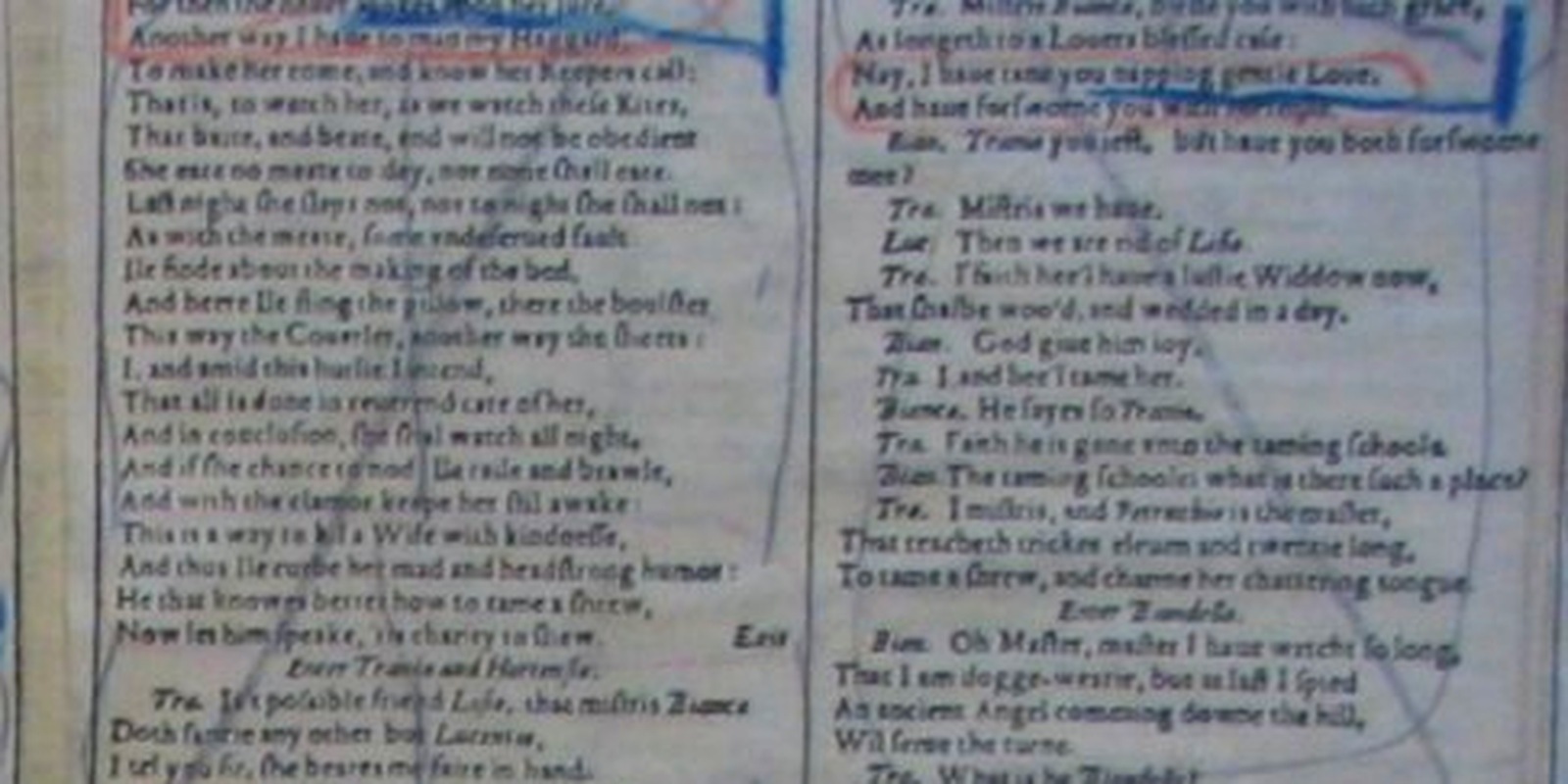
Folio pages pasted to canvas and marked in red, blue and pencil
Strand
Word Cipher
The cipher wheel’s canvas — Folio pages mounted and marked in Owen’s workshop
Orville Owen's method, and the containing program — reverse-engineering how the Word Cipher actually worked.
Latest — September 5, 2026
All issues

Newest first. Issues are superseded, never removed — a link sent today still resolves next year.
Biliteral Cipher · October 12, 2026
Checking its own claims
This site said Book VI of De Augmentis gave the world binary code, steganography and telecommunications. Two of the three fail on priority, and badly: torches carried arbitrary letters in Polybius around 150 BCE, and concealed writing was a named art with a printed literature seventeen years before Bacon published. What survives is stronger than any of the three — the union of all three in one place, stated so it can be attacked. Three entries rewritten; the superseded wording is kept on the record.
Biliteral Cipher · October 11, 2026
No rule, and no two groups
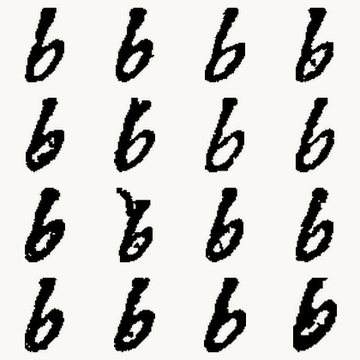
Gallup’s 463-page volume gives one sentence of classification guidance, on page 2, naming no feature of any letter. The feature description exists only in Riverbank’s Hints to the Decipherer of 1916 — fifteen years later — and names five characteristics, not one. Tested against all five, 149 lower-case italic b show no two-group structure a blind search can find.
Biliteral Cipher · September 9, 2026
His only condition
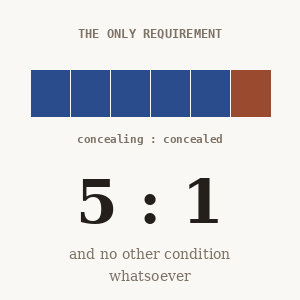
Bacon’s published system names exactly one requirement — that the concealing text run five times the length of the concealed — and disclaims every other in the same sentence: no other condition or restriction whatsoever is required. No start marker, no stop marker, and nothing to say which text carries a message. What that costs a reader is measured here, against a noise floor.
Biliteral Cipher · September 8, 2026
The whole Folio, one sort
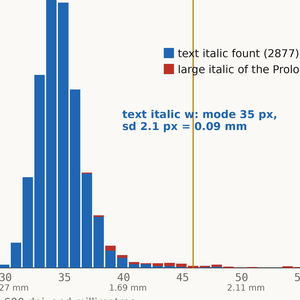
Every lower-case italic w in the thirty-six plays — 3,080 of them by the Bodleian’s own transcription — found on the photographs and measured against both Riverbank stencils. In the fount the plays are set in there is one w, not two, and no third shape either.
Biliteral Cipher · September 7, 2026
Their rules, their page
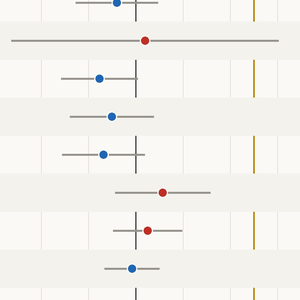
Riverbank’s own 1916 rule for telling the two forms apart — ten degrees of lean against fifteen — fails on the page it was written for, and every other rule in the booklet fails with it. The w still stands, and a defect in its second-page test is corrected in the open.
Biliteral Cipher · September 5, 2026
Their stencil, our page
Riverbank’s own 1916 photographs, turned into a measuring instrument, sorted every measurable w into exactly the groups they marked — having never seen the page.
Word Cipher · September 5, 2026
The photograph was a thumbnail
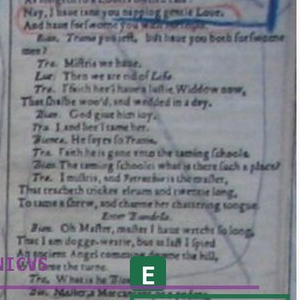
The full-size copy is twenty-three times larger, and shows a red pencil line drawn around six lines of Shakespeare — Owen’s own described method, on the object.
Biliteral Cipher · September 4, 2026
A control page that failed to kill the claim
A page nobody claims is enciphered did not reproduce the split in the letter w — while the Baconians’ own books turned out to work three different printings.
Biliteral Cipher · September 3, 2026
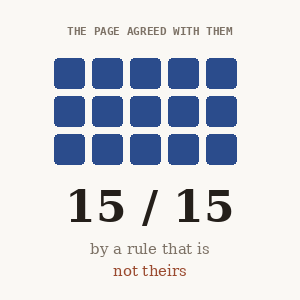
Fifteen out of fifteen, by the wrong rule
A measurement of the page reproduces Riverbank’s 1916 marking of the italic w on every letter it could isolate — using a rule that is not the one their manual states.
Biliteral Cipher · September 2, 2026
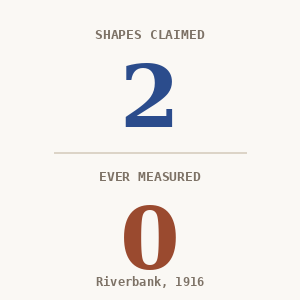
Two shapes, and nobody had looked
Riverbank Laboratories said in 1916 that the italic w in Shakespeare’s First Folio comes in two shapes. We went and looked.

Part of New Gorhambury — the sources, the experiments, and the Word Cipher work.

·